
Understanding Nonlinear Healing Paths
Understanding Nonlinear Healing Paths
When we think about healing, many of us imagine a straight path where every step forward marks significant progress. However, the truth is far from that. Healing is a journey that often takes us through winding roads with peaks and valleys. This blog post will explore the concept that "Healing Isn't Linear" and why understanding this can foster a healthier relationship with recovery.
Healing Isn't Linear
The phrase "Healing Isn't Linear" may sound familiar to some, but what does it truly mean? It emphasizes the unpredictable nature of the healing process, where progress may not always be visible, and setbacks are part of the journey. Healing can be physical, emotional, or mental, and each type has its own unique path.
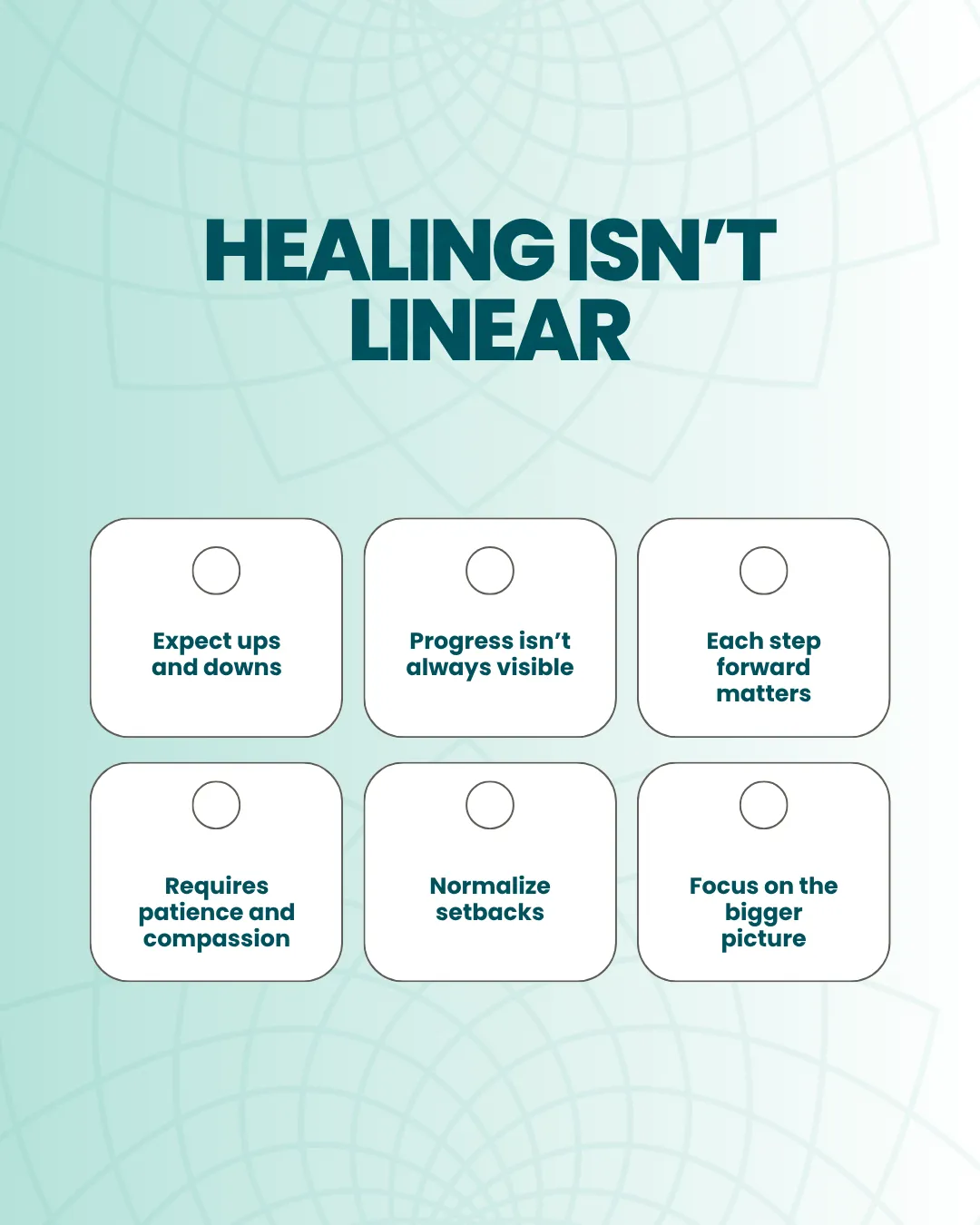
Expect Ups and Downs
One of the most crucial things to understand about healing is that it involves ups and downs. These fluctuations are normal. You might feel better one day and worse the next. This doesn’t mean you’re not healing; it’s simply a part of the process.
- Celebrate small victories, like a day with reduced symptoms.
- Understand that some days will be harder than others.
Progress Isn't Always Visible
Progress during healing is often happening beneath the surface. Just because you can’t see immediate results doesn’t mean they’re not there. Trust that healing is occurring even when it’s not obvious.
- Keep track of subtle changes in your well-being.
- Remember that healing can be a slow process.
Each Step Forward Matters
Every minor improvement, every small victory, counts on your healing journey. Focus on the steps you take rather than how far you have to go. Each step forward, no matter how small, is progress.
- Reflect on how far you’ve come, not just how far you have to go.
- Be proud of every positive change, however slight.
Requires Patience and Compassion
Healing demands patience and compassion towards oneself. Being kind to yourself during this journey is essential. Compassion helps you to forgive yourself for perceived failures and encourages resilience.
- Practice self-care regularly.
- Acknowledge the effort you’re putting into healing.
Normalize Setbacks
Setbacks are an inevitable part of any healing process. They are not failures but opportunities to learn more about what your body and mind need.
- Don’t view setbacks as defeats.
- Use setbacks as learning experiences to adjust your approach.
Focus on the Bigger Picture
Amidst the daily challenges of healing, it's important to keep the big picture in mind. This means understanding that healing is a long-term process, and daily struggles are only a small part of it.
- Visualize where you want to be in the future.
- Keep hopeful thoughts and positive affirmations close.
Conclusion
Understanding that healing isn’t linear can help you approach your recovery with a more balanced and compassionate outlook. Remember that progress is personal, and comparing yourself to others will only serve to distract you from your own journey. Embrace the ups and downs, recognize that progress is happening even if it’s not visible, and always have patience and compassion for yourself. By focusing on the broader picture, you can find peace and strength in the journey of healing.
